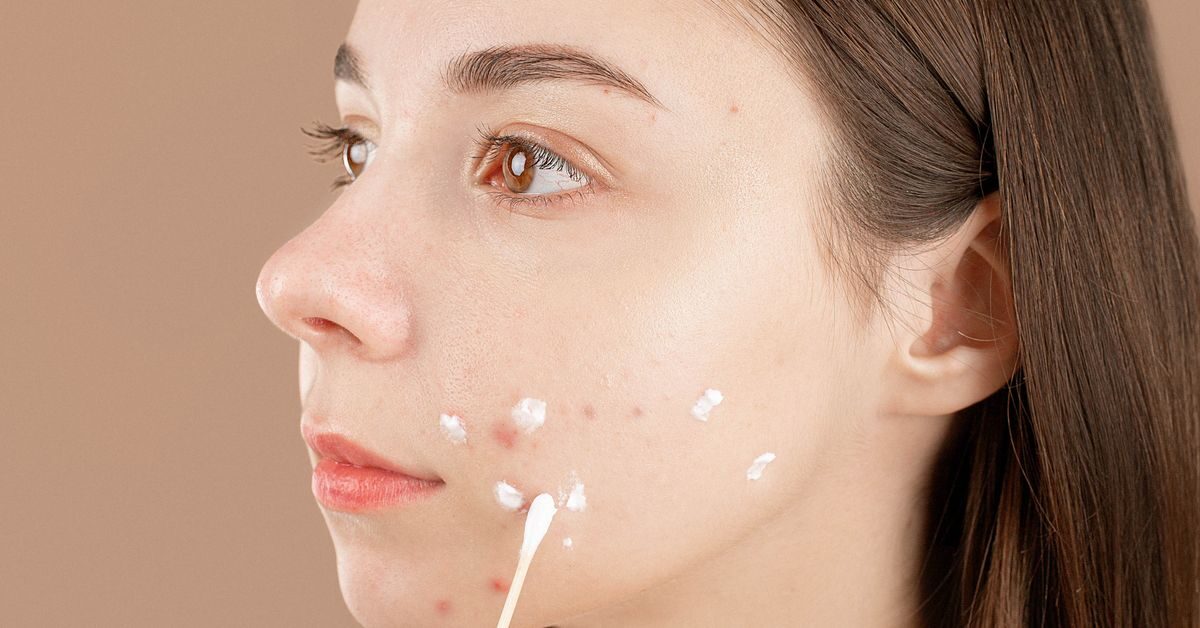
Hormonal acne shows up in a recognisable pattern, deep, tender breakouts along the jawline and chin that often flare around the same time each month, and it responds differently to treatment than typical teenage acne. Understanding the hormonal trigger behind it helps explain why some standard acne products work only partially, and what else is worth trying.
Quick answer
Hormonal acne typically appears as deep, tender bumps along the jawline, chin and lower cheeks, often worsening in the week before a period due to hormone fluctuations. Skincare with salicylic acid, niacinamide or azelaic acid can help manage it, while more persistent cases often respond better to medical options such as certain birth control pills or spironolactone, prescribed by a doctor.
What makes acne “hormonal”?
All acne involves hormones to some degree, since androgens (a group of hormones) stimulate oil glands. Hormonal acne specifically refers to breakouts that are strongly tied to natural hormone fluctuations, most often around the menstrual cycle, though it can also relate to conditions like polycystic ovary syndrome (PCOS) or occur during perimenopause.
Signs of hormonal acne
| Sign | Why it points to hormonal acne |
|---|---|
| Breakouts along the jawline, chin and lower cheeks | This area has more androgen-sensitive oil glands |
| Deep, tender bumps rather than surface whiteheads | Hormonal breakouts tend to be more inflamed and cystic |
| Flares in the week before your period | Progesterone and androgen shifts increase oil production |
| Breakouts that started or worsened in adulthood | Common pattern for hormonal acne, unlike typical teenage acne |
| Accompanied by other symptoms like irregular periods or excess hair growth | May suggest an underlying hormonal condition like PCOS, worth discussing with a doctor |
What causes hormonal acne?
| Trigger | How it works |
|---|---|
| Monthly cycle | Androgen and progesterone shifts increase oil production before a period |
| Polycystic ovary syndrome (PCOS) | Higher androgen levels can cause persistent acne, often with other symptoms |
| Stress | Raises cortisol, which can increase oil production indirectly |
| Starting or stopping hormonal birth control | Changes in hormone levels can temporarily trigger breakouts |
| Perimenopause | Shifting hormone levels can trigger new or worsened acne in some women |
| Certain medications | Some can influence hormone levels and trigger acne as a side effect |
Skincare that helps with hormonal acne
| Ingredient | How it helps | Learn more |
|---|---|---|
| Salicylic acid (BHA) | Clears clogged pores and reduces inflammation | Salicylic acid guide |
| Niacinamide (a gentle vitamin) | Reduces oil production and calms redness | Niacinamide guide |
| Azelaic acid | Gentle, reduces inflammation and helps marks | Suitable for sensitive, acne-prone skin |
| Benzoyl peroxide | Targets acne-causing bacteria | Best for inflamed, active breakouts |
| Retinoids | Long-term prevention, improves texture and marks | See our retinol vs tretinoin guide |
A consistent routine with one or two of these, used for at least 8–12 weeks, is a reasonable first step. See our how to get rid of pimples guide for a full daily routine.
When skincare alone is not enough
Hormonal acne that is deep, cystic, scarring or clearly tied to an underlying hormonal pattern often responds only partially to topical skincare alone. In these cases, a doctor may discuss options that work on the hormonal trigger directly, rather than just the skin surface.
| Medical option | How it works | Notes |
|---|---|---|
| Combined oral contraceptives | Certain birth control pills can reduce androgen-driven oil production | Prescription only; not suitable for everyone |
| Spironolactone | A medication that blocks androgen receptors, reducing oil production | Prescription only; regular monitoring sometimes needed |
| Oral or topical retinoids | Address acne through cell turnover and inflammation, alongside hormonal treatment | Topical versions available over the counter at lower strengths |
| Investigating PCOS or other conditions | If other symptoms are present, blood tests and an ultrasound may be recommended | Done by a doctor based on your full symptom picture |
Tracking your hormonal acne pattern
- Note which days of your cycle breakouts tend to appear or worsen.
- Track whether deep, jawline-focused bumps are a consistent pattern over several months.
- Note any other symptoms, such as irregular periods, excess hair growth or significant weight changes.
- Bring this information to a doctor or dermatologist if the pattern is clear and bothersome.
Lifestyle factors that may help
| Factor | Possible effect |
|---|---|
| Managing stress | May reduce cortisol-related oil production in some people |
| Consistent sleep | Supports overall hormonal balance and skin repair |
| Limiting very high-sugar or high-dairy foods | Some people notice fewer flares, though evidence varies by individual |
| Avoiding picking or squeezing | Reduces the risk of scarring from already inflamed hormonal breakouts |
These lifestyle factors support overall skin health but are unlikely to fully resolve hormonal acne on their own if the underlying hormonal trigger is significant.
Hormonal acne in teenagers vs adults
| Group | Typical pattern | Notes |
|---|---|---|
| Teenagers | Often more widespread, including forehead and cheeks | Puberty hormone surges are the main driver |
| Adult women | Often concentrated on the jawline and chin, cyclical | Linked more closely to the monthly cycle |
| Adult men | Can also occur, often related to stress or other hormonal factors | Less studied than in women, but follows similar principles |
Adult-onset hormonal acne that was not present in the teenage years is a common and valid reason to see a dermatologist, since it often responds differently to standard teenage-acne products.
Hormonal acne and your overall routine
Alongside any targeted treatment, keep the rest of your skincare simple and consistent: a gentle cleanser, a suitable moisturiser and daily sunscreen. Overloading the skin with too many additional products while managing a hormonal flare often adds irritation without speeding up improvement.
Hormonal acne and stress management
While stress does not single-handedly cause this type of acne, chronically high stress can worsen flares for some people by affecting cortisol and, indirectly, oil production. Simple habits like regular sleep, exercise and relaxation techniques will not replace targeted treatment but can support overall results.
Whatever combination of skincare and, if needed, medical treatment you use, give it a full three menstrual cycles before deciding whether it is working, since hormonal patterns take that long to show a clear, consistent response.
Hormonal acne and scarring prevention
Because hormonal breakouts tend to be deeper and more inflamed, they carry a higher risk of leaving marks or scars if squeezed or picked. Treating the breakout gently and consistently, rather than trying to speed up healing by picking, gives the best chance of clear skin without lasting marks.
If you have been managing hormonal acne alone for months without much progress, that is a reasonable point to bring in a professional opinion rather than continuing to try product after product on your own.
A quick final tip: keep a simple calendar note of flare days alongside your cycle dates for at least two to three months, since this record is often the single most useful thing you can bring to a doctor appointment.
With the right combination of patience, tracking and, when needed, professional input, most people see meaningful improvement over a few months.
See a dermatologist if
- Acne is cystic, scarring or very painful
- You notice irregular periods, excess hair growth or significant weight changes alongside acne (possible PCOS)
- Hormonal acne does not improve after 3 months of a consistent skincare routine
- You are considering starting or stopping any hormonal medication for acne
Key takeaways
- Hormonal acne typically clusters on the jawline, chin and lower cheeks.
- It often flares in the week before a period due to hormone shifts.
- Salicylic acid, niacinamide and azelaic acid can help manage it topically.
- Persistent or cystic hormonal acne often needs medical options like certain birth control pills or spironolactone.
- See a doctor if other symptoms suggest an underlying hormonal condition.
Frequently asked questions
How do I know if my acne is hormonal?
Look for deep, tender bumps along the jawline and chin that flare in the week before your period, especially if it started or worsened in adulthood.
Can skincare alone treat hormonal acne?
It can help manage mild to moderate cases, but persistent or cystic hormonal acne often needs medical treatment addressing the hormonal trigger.
What birth control helps with hormonal acne?
Certain combined oral contraceptives can reduce androgen-driven oil production, but this should be discussed with a doctor.
Does diet cause hormonal acne?
Diet is not the primary cause, though some people notice flares with very sugary or high-dairy foods.
Is hormonal acne the same as PCOS acne?
PCOS can cause a form of hormonal acne due to higher androgen levels, but not everyone with hormonal acne has PCOS.
Can hormonal acne go away on its own?
It may fluctuate with your cycle or life stage, but persistent cases usually need targeted treatment rather than waiting it out.
Recognising the hormonal acne pattern helps set realistic expectations: topical skincare can meaningfully help, but stubborn or cystic cases often need a doctor to address the hormonal trigger directly.
This article is for general information only and is not medical advice. It has not been reviewed by a doctor. For any skin or hair condition, consult a dermatologist.
