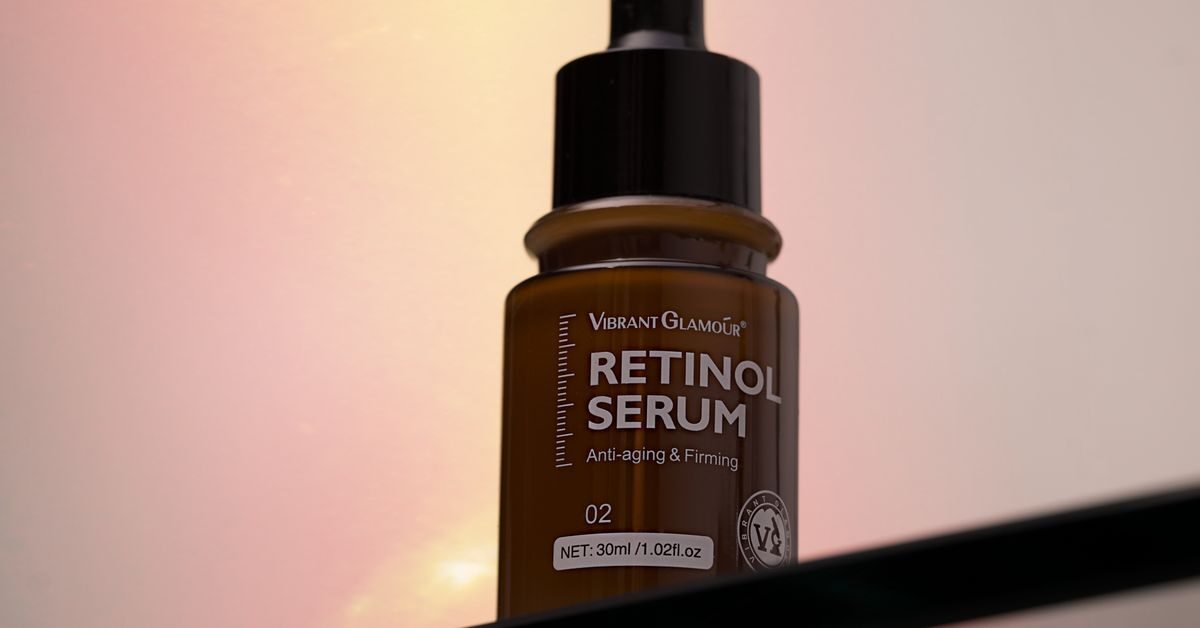
Retinol vs tretinoin is a common question for anyone researching the strongest anti-ageing and acne ingredients available. Both belong to the retinoid family and work by speeding up skin cell turnover and supporting collagen, but they differ significantly in strength, availability and how quickly they act, which changes who should start with which one.
Quick answer
Retinol vs tretinoin: retinol is a weaker, over-the-counter retinoid that the skin must convert into its active form, making it gentler but slower to show results. Tretinoin is a prescription-only retinoid that is already in its active form, working faster and more powerfully, but with a higher chance of initial irritation. Most beginners should start with retinol; tretinoin is generally reserved for more stubborn concerns under medical guidance.
What is the difference between retinol and tretinoin?
Both are part of the retinoid family, derived from vitamin A. The key difference is potency and how directly they work. Tretinoin (also called all-trans retinoic acid) is already biologically active once applied to the skin. Retinol must first be converted by skin enzymes into retinaldehyde, then into tretinoin’s active form, a process that takes time and reduces its overall strength and speed.
| Factor | Retinol | Tretinoin |
|---|---|---|
| Availability | Over the counter | Prescription only in most countries |
| Potency | Weaker; needs conversion in skin | Stronger; already active |
| Speed of results | Slower, often 12+ weeks | Faster, often 8–12 weeks |
| Irritation risk | Lower, especially at low strengths | Higher, especially when starting |
| Typical strength | 0.01–1% | 0.025–0.1% |
| Common uses | General anti-ageing, mild acne, texture | Moderate to severe acne, more pronounced ageing concerns |
How much weaker is retinol than tretinoin?
Various estimates suggest retinol is roughly 10 to 20 times weaker than tretinoin at an equivalent percentage, due to the extra conversion steps needed and generally lower stability. This is why a 1% retinol product is not remotely equivalent to a 1% tretinoin product; the tretinoin version is dramatically stronger.
Retinol vs tretinoin: who should choose which?
| Situation | Better starting point |
|---|---|
| New to retinoids, mild concerns like early fine lines or dullness | Retinol |
| Moderate to severe acne not responding to other treatments | Tretinoin, under a dermatologist’s guidance |
| Sensitive skin, first time using any retinoid | Retinol, at a low strength |
| Significant sun damage or more advanced ageing concerns | Tretinoin, if tolerated, under medical guidance |
| Pregnant or breastfeeding | Neither; both are generally avoided during pregnancy and breastfeeding |
| Want a product without a prescription | Retinol |
Starting the gentler option safely
- Patch test, then start with a low strength, such as 0.1–0.3%.
- Apply 2 nights a week initially, after cleansing and once skin is fully dry.
- Follow with a moisturiser; some people prefer applying moisturiser first (a “buffer” technique) to reduce irritation.
- Build up to more frequent use over several weeks as tolerated.
- Always use sunscreen the next morning.
How the prescription option is typically used
Tretinoin requires a prescription and should be used under a dermatologist’s guidance, who will recommend a starting strength and frequency based on your skin and specific concern. It commonly causes an initial “retinisation” period of dryness, redness and peeling for the first few weeks, which usually settles with continued, correct use.
Retinol vs tretinoin: managing irritation
| Strategy | How it helps |
|---|---|
| Start low and slow | Reduces the chance of a harsh reaction |
| Buffer with moisturiser | Dilutes the retinoid slightly, easing irritation |
| Avoid combining with other strong actives at first | Prevents compounding dryness or redness |
| Use a gentle, fragrance-free moisturiser | Supports the skin barrier during the adjustment period |
| Reduce frequency if irritation appears | Allows skin to recover before increasing again |
Our Ingredient Clash Checker can help you see how a retinoid combines with other products already in your routine, and our night skin care routine guide explains where it fits in your overall order of steps.
Side effects: retinol vs tretinoin
| Side effect | Retinol | Tretinoin |
|---|---|---|
| Dryness and peeling | Mild to moderate | Often more pronounced initially |
| Redness | Occasional | More common when starting |
| Sun sensitivity | Yes, for both | Yes, typically more pronounced |
| Purging (temporary breakouts) | Possible | More commonly reported |
| Long-term tolerance | Builds with consistent use | Builds with consistent use, usually over a longer adjustment period |
Can you switch from retinol to tretinoin?
Yes, many people use retinol for months to build tolerance to retinoids generally, then move to tretinoin under a dermatologist’s care if they want stronger results or are treating more significant acne or skin concerns. This step-up approach can reduce the intensity of the adjustment period compared with starting directly on tretinoin.
A note on generic and branded tretinoin
Tretinoin is available under various brand and generic names, typically as a cream or gel at low percentages such as 0.025%, 0.05% or 0.1%. A dermatologist will usually start a new user at the lowest strength and adjust based on how the skin responds over the following weeks.
Cost and access considerations
| Factor | Retinol | Tretinoin |
|---|---|---|
| Cost | Generally lower, widely available | Varies; needs a consultation plus prescription cost |
| Access | Any pharmacy or skincare retailer | Requires a doctor’s visit in most places |
| Ongoing supervision | Not required, though patch testing is wise | Recommended, especially in the first few months |
A simple decision guide
| Your situation | Likely starting point |
|---|---|
| First retinoid, mild concerns | Retinol, low strength |
| Already tolerate retinol well, want faster results | Consult a dermatologist about tretinoin |
| Moderate to severe acne | Dermatologist visit; may prescribe tretinoin or another option |
| Pregnant or planning pregnancy | Neither; discuss safe alternatives with a doctor |
Retinol vs tretinoin for acne specifically
For acne rather than general ageing concerns, tretinoin generally has stronger evidence and faster results, which is why dermatologists often prescribe it for moderate to severe cases. Retinol can still help milder acne and is a reasonable starting point if a prescription option is not accessible or appropriate yet.
Whichever option you choose in the retinol vs tretinoin decision, consistency and sun protection matter just as much as the strength of the product itself.
Supporting the skin barrier with either option
A simple, fragrance-free moisturiser and gentle cleanser make it easier to tolerate either retinoid, especially in the first several weeks. Skipping other strong actives during this adjustment period also reduces the chance of excessive dryness or redness.
If cost or access to a dermatologist is limiting your choice right now, a consistent, well-tolerated retinol routine is still a genuinely useful option, not just a consolation prize, while you decide whether to pursue a prescription later.
A quick final tip: write down the exact product name and strength you start with, since comparing notes with a dermatologist later is much easier with specifics rather than a vague memory of “some retinol cream”.
A quick final tip: keep your receipts and packaging for the first few weeks, in case your skin reacts strongly and you need to show a pharmacist or doctor exactly what you used.
Either path, followed consistently and paired with daily sunscreen, can meaningfully improve skin texture and clarity over several months.
Whichever you start with, think of it as a multi-month commitment rather than a quick fix, since both ingredients reward patience far more than urgency.
See a dermatologist if
- You are pregnant, trying to conceive or breastfeeding
- Irritation is severe, with swelling, blistering or intense burning
- Acne is significant and not responding to over-the-counter options, which may need a dermatologist and possibly tretinoin
- You want to start tretinoin, which requires a prescription and medical guidance
Key takeaways
- Retinol vs tretinoin: both are retinoids, but tretinoin is far stronger and prescription-only.
- Retinol must be converted by the skin, making it gentler but slower.
- Most beginners should start with retinol at a low strength.
- Tretinoin is typically reserved for more stubborn concerns, under medical guidance.
- Both require sunscreen the next morning and should be avoided during pregnancy.
Frequently asked questions
Is retinol as effective as tretinoin?
No, tretinoin is significantly stronger and faster-acting, though retinol can still give meaningful results over a longer period.
Can I buy tretinoin without a prescription?
In most countries, no. Tretinoin requires a prescription and should be used under medical guidance.
How much weaker is retinol compared to tretinoin?
Roughly 10 to 20 times weaker at an equivalent percentage, due to the conversion process retinol must undergo in the skin.
Should I start with retinol or go straight to tretinoin?
Most people should start with retinol to build tolerance, moving to tretinoin only if needed and under a dermatologist’s guidance.
Can retinol and tretinoin be used together?
No, using both together is unnecessary and increases the risk of irritation; choose one at a time.
Are retinol and tretinoin safe during pregnancy?
No, both are generally avoided during pregnancy and breastfeeding; ask a doctor about safe alternatives.
For most people, retinol is the sensible place to start in the retinol vs tretinoin decision, with tretinoin reserved for more stubborn concerns under a dermatologist’s care.
This article is for general information only and is not medical advice. It has not been reviewed by a doctor. For any skin or hair condition, consult a dermatologist.
