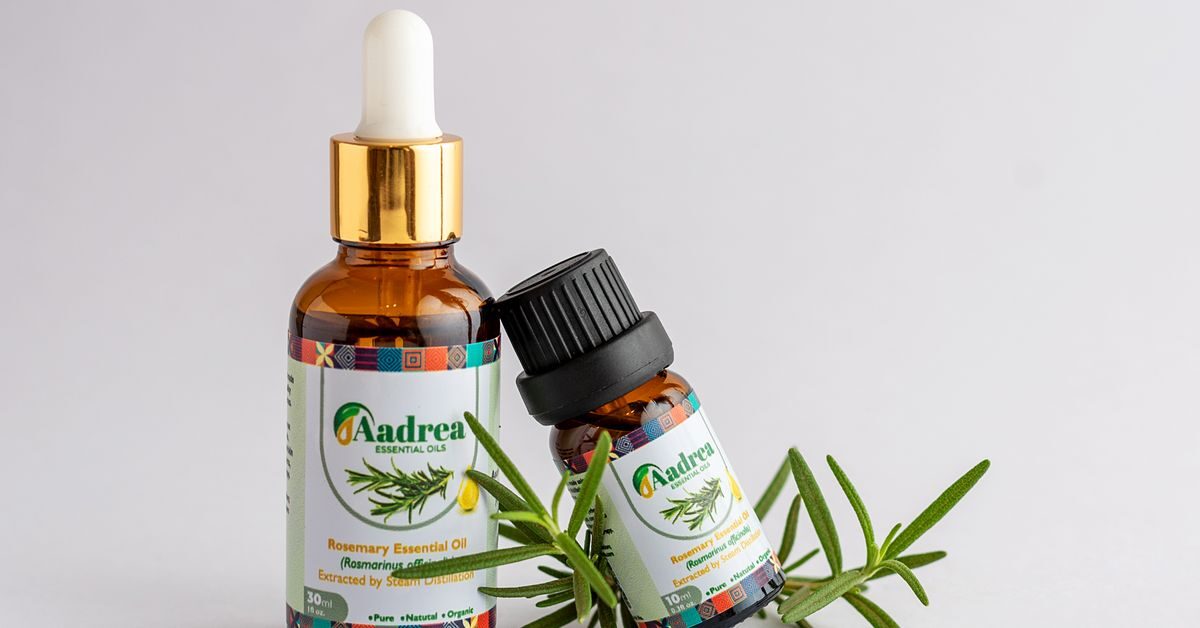
Rosemary oil for hair growth has become one of the most searched hair remedies in India, thanks to social media and a small but often-quoted clinical study. The short version: there is some early evidence it can help pattern hair thinning, but it is not a quick fix, and it must be diluted properly to avoid irritating your scalp.
Quick answer
Rosemary oil for hair growth has limited but promising evidence: one 2015 trial found rosemary oil worked about as well as 2% minoxidil for pattern hair loss after six months, with less scalp itching. Dilute 3–5 drops of rosemary essential oil in a tablespoon of carrier oil, massage it into the scalp 2–3 times a week, patch test first, and give it at least 3–6 months.
What does the research say about rosemary oil for hair growth?
The best-known study, published in the journal SKINmed in 2015, followed about 100 people with androgenetic alopecia (pattern hair loss). Half used rosemary oil and half used 2% minoxidil for six months. After three months, neither group showed much change. However, after six months both groups had a similar increase in hair count, and the rosemary group reported less scalp itching.
Animal and lab studies also suggest rosemary may improve blood flow to the scalp and have anti-inflammatory and antioxidant effects. That said, the human evidence is still small. Larger, independent trials are needed before rosemary oil can be called a proven treatment.
| Question | What the evidence suggests |
|---|---|
| Can it regrow hair? | Possibly for mild pattern thinning; evidence is limited |
| Is it as good as minoxidil? | One small trial found similar results at 6 months |
| How long does it take? | At least 3–6 months |
| Does it help dandruff? | Not well studied; antifungal shampoos work better |
| Does it stop all hair fall? | No. Hair fall has many causes that need different treatment |
Rosemary oil vs minoxidil
| Rosemary oil | Minoxidil | |
|---|---|---|
| Type | Plant essential oil | Approved medicine for pattern hair loss |
| Evidence | Small studies | Many large trials |
| How often | 2–3 times a week (diluted) | Once or twice daily |
| Common side effects | Scalp irritation if undiluted | Scalp itching, initial shedding |
| Best for | Mild thinning, people avoiding medicines | Proven treatment for pattern hair loss |
If your hair loss is progressing, minoxidil and other dermatologist-prescribed treatments have far stronger evidence. Check your stage with our free Norwood scale hair loss test before deciding.
How to use rosemary oil for hair growth
Method 1: Diluted oil scalp massage
- Mix 3–5 drops of rosemary essential oil into 1 tablespoon (about 15 ml) of a carrier oil such as coconut, jojoba or almond oil.
- Part your hair and massage the mixture into your scalp with your fingertips for 3–5 minutes.
- Leave it on for at least 30 minutes, or overnight if your scalp tolerates it.
- Wash out with a mild shampoo.
- Repeat 2–3 times a week.
Method 2: Add it to your shampoo
To use rosemary oil for hair growth in your wash routine, add 2–3 drops of rosemary essential oil to a single portion of shampoo in your palm, not to the whole bottle. Lather, leave it on the scalp for 2–3 minutes, then rinse. This is gentler but gives less contact time.
Method 3: Ready-made rosemary hair oils or serums
Many brands sell pre-diluted rosemary oil for hair growth. Check the label for the dilution and other ingredients. Paste the ingredient list into our ingredient checker to spot fragrance and other potential irritants.
Tip: Never apply undiluted rosemary essential oil directly to your scalp. It can cause burning, redness and an itchy rash.
How long does rosemary oil take to work?
Hair grows slowly, roughly 1 cm a month, and follicles take months to change their cycle. In the main study, results only appeared at six months. Therefore, try rosemary oil for hair growth consistently for at least 3–6 months before judging it, and take photos once a month in the same light to track progress.
Side effects and who should avoid it
- Scalp redness, burning or itching, especially if undiluted
- Allergic contact dermatitis in some people
- Eye irritation if it drips into your eyes
- Greasy hair if too much carrier oil is used
Avoid rosemary essential oil, or ask a doctor first, if you are pregnant, breastfeeding, have epilepsy, or have very sensitive skin. Do not use it on broken or inflamed scalp. Keep essential oils away from children.
Hair fall causes rosemary oil cannot fix
| Cause | Signs | What helps |
|---|---|---|
| Pattern hair loss | Receding hairline or thinning crown or part | Dermatologist treatments; rosemary may help mildly |
| Telogen effluvium | Sudden shedding 2–3 months after illness, stress or surgery | Usually recovers on its own; check diet and iron |
| Iron, vitamin D or thyroid problems | Diffuse thinning, tiredness | Blood tests and treatment |
| Dandruff and seborrhoeic dermatitis | Flakes, itching | Antifungal shampoo such as ketoconazole shampoo |
| Alopecia areata | Round bald patches | See a dermatologist |
Tips for Indian hair and weather
- In humid weather, use less carrier oil and wash it out the same day to avoid a greasy, itchy scalp.
- Oil the scalp only if it is not flaky. A flaky scalp can worsen with heavy oils.
- Hard water can make hair feel rough; a clarifying wash now and then helps.
- Learn how your hair absorbs oil with our hair porosity test.
How to make rosemary oil for hair growth at home
You can make a gentle infused oil in your kitchen. It is weaker than essential oil but less likely to irritate. Note that this is different from the concentrated oil used in the clinical study.
- Take a handful of fresh or dried rosemary leaves and dry them completely if fresh, since water can spoil the oil.
- Add them to about 200 ml of coconut, sesame or olive oil in a clean steel pan.
- Warm on the lowest flame for 10–15 minutes; do not let it smoke.
- Cool, strain into a clean, dry glass bottle and store away from sunlight.
- Use within one month and discard it if it smells rancid.
Homemade infused oil is fine as a scalp massage oil. However, it is unlikely to match the strength used in research, so keep expectations modest.
Rosemary water vs rosemary oil for hair growth
| Rosemary water | Rosemary oil (diluted essential oil) | |
|---|---|---|
| How it is made | Leaves boiled in water and cooled | Essential oil mixed into a carrier oil |
| Strength | Mild | Stronger |
| Shelf life | 2–3 days in the fridge | Several months if stored well |
| Feels greasy? | No | Can, if too much carrier oil is used |
| Research support | Very little | One small trial on rosemary oil |
Rosemary water is popular because it is light and suits humid weather. Even so, most of the hair growth discussion is about the oil, not the water. If you prefer the water, spray it on the scalp after washing and use it within a few days.
Who is rosemary oil for hair growth best for?
| Situation | Is it worth trying? |
|---|---|
| Early, mild thinning at the part or temples | Yes, as a low-cost trial |
| Wanting a natural option alongside a doctor’s plan | Possibly, after checking with your dermatologist |
| Sudden heavy shedding after fever or stress | Not the main fix; shedding often settles on its own |
| Patchy bald spots | No; see a dermatologist |
| Very dry, flaky or itchy scalp | Treat the scalp first |
Tracking your progress
Because hair changes slowly, a simple record helps. Take photos of your part line and hairline every four weeks, in the same light and angle. Moreover, note how many hairs you see on your pillow or in the shower drain each week. If shedding increases or new bald patches appear, stop guessing and see a dermatologist.
Combining rosemary oil for hair growth with good basics also helps: enough protein and iron in your diet, gentle washing, and avoiding tight hairstyles that pull at the roots.
See a dermatologist if
- You are losing hair in patches or very quickly
- Hair loss comes with scalp pain, scaling or redness
- You notice a receding hairline or a widening part that keeps progressing
Key takeaways
- Rosemary oil for hair growth has some early evidence for pattern thinning.
- One small trial found results similar to 2% minoxidil after 6 months.
- Always dilute it: 3–5 drops per tablespoon of carrier oil.
- Use it 2–3 times a week for at least 3–6 months.
- See a dermatologist for progressive or patchy hair loss.
Frequently asked questions
Does rosemary oil really help hair growth?
There is limited evidence. One small 2015 trial found rosemary oil worked about as well as 2% minoxidil for pattern hair loss after six months, but larger studies are needed.
How often should I apply rosemary oil to my hair?
Two to three times a week, diluted in a carrier oil, massaged into the scalp and washed out after at least 30 minutes.
Can I leave rosemary oil in my hair overnight?
Yes, if it is properly diluted and your scalp does not get itchy or irritated.
Can I use rosemary oil with minoxidil?
Talk to a dermatologist first. Using both can increase scalp irritation.
Which carrier oil is best with rosemary oil?
Jojoba, coconut, almond or argan oil are common choices. Use lighter oils if your scalp is oily.
How long before I see results from rosemary oil?
Expect at least 3–6 months of regular use before judging results.
Overall, rosemary oil for hair growth is a reasonable, low-cost option to try for mild thinning, provided you dilute it, stay consistent and get progressive hair loss checked by a dermatologist.
This article is for general information only and is not medical advice. It has not been reviewed by a doctor. For any skin or hair condition, consult a dermatologist.
