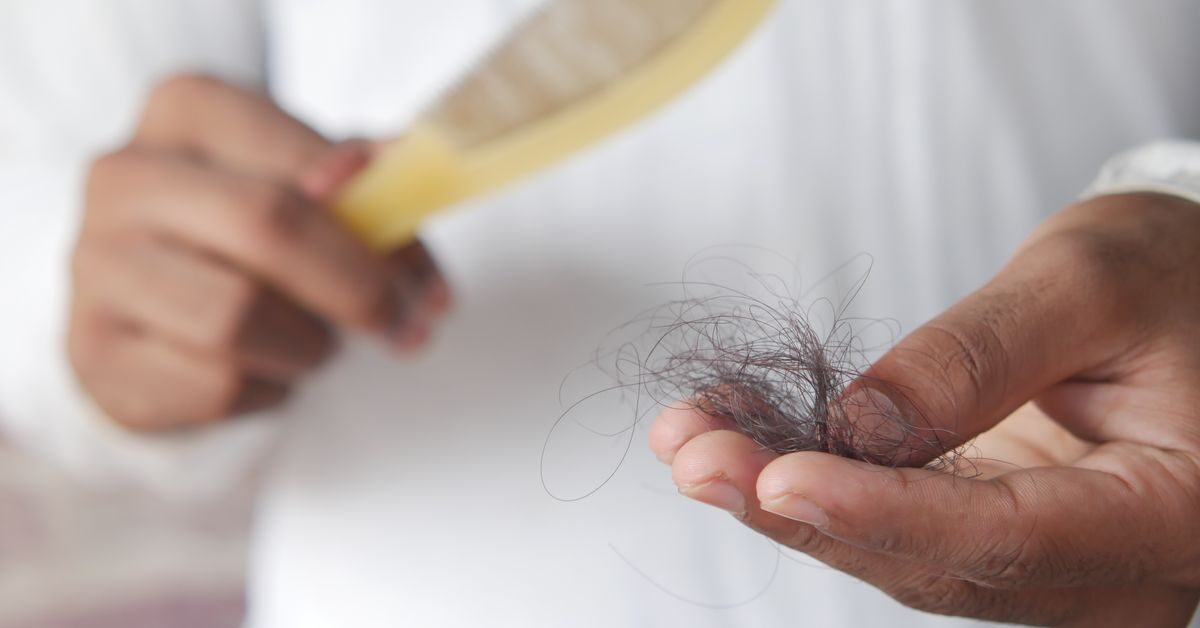
Hair fall treatment only works well once you know what is actually causing the shedding, since pattern hair loss, stress-related shedding, nutrient deficiencies and scalp conditions all need different approaches. Losing some hair every day is normal, but noticeably thinning hair, a widening part, or handfuls of hair in the shower deserve a proper look at the cause before trying any treatment.
Quick answer
Effective hair fall treatment starts with identifying the cause. Minoxidil is the best-studied topical option for pattern hair loss. Stress-related shedding (telogen effluvium) usually resolves on its own in a few months. Iron, vitamin D or thyroid issues need blood tests and medical treatment. Dandruff and scalp conditions respond to targeted shampoos. A dermatologist can help pinpoint the cause if it is not obvious.
How much hair fall treatment is really needed?
Most people lose 50 to 100 hairs a day as part of the natural hair cycle, where each strand grows for years, rests, then sheds to be replaced by a new one. This is normal and does not need treatment. Hair fall becomes a concern when you notice a widening part, a receding hairline, visible thinning, or significantly more hair than usual on your pillow, comb or in the shower drain over several weeks.
Finding the real cause before choosing a hair fall treatment
| Pattern of hair fall | Likely cause | Best first step |
|---|---|---|
| Gradual thinning at the crown or receding hairline over months or years | Pattern hair loss (androgenetic alopecia) | Minoxidil, and a dermatologist for prescription options |
| Sudden, heavy shedding 2–3 months after illness, fever, surgery or major stress | Telogen effluvium | Usually resolves on its own within a few months |
| Round, smooth bald patches | Alopecia areata | See a dermatologist promptly |
| Diffuse thinning with fatigue, pale skin or irregular periods | Possible iron, thyroid or hormonal issue | Blood tests with a doctor |
| Flaking, itching scalp alongside shedding | Dandruff or scalp conditions | Antifungal shampoo and scalp care |
| Thinning after childbirth | Postpartum hair fall | Usually temporary; resolves within 6–12 months |
Proven hair fall treatment options
1. Minoxidil
Minoxidil is the most studied topical treatment for pattern hair loss, available at 2% or 5% strength. It needs consistent daily use for at least 3–6 months to show visible results.
2. Treating the underlying deficiency
If blood tests show low iron, vitamin D or a thyroid imbalance, correcting that specific issue under medical guidance often resolves related hair fall over the following months.
3. Scalp care for dandruff-related shedding
An antifungal shampoo such as ketoconazole shampoo can calm an itchy, flaky scalp that may be contributing to shedding, alongside general dry scalp remedies if dryness is also a factor.
4. Prescription options for pattern hair loss
For men with pattern hair loss, a dermatologist may discuss prescription options such as oral finasteride alongside minoxidil. These need medical supervision and are not appropriate for everyone, particularly women who are pregnant or may become pregnant.
5. Gentle hair handling
Reducing breakage from tight hairstyles, harsh brushing on wet hair, and excessive heat styling will not fix an underlying medical cause, but it does reduce additional hair loss from physical damage layered on top.
What does not reliably work
| Option | Why it is often disappointing |
|---|---|
| Biotin supplements, without deficiency | Little added benefit once levels are already normal; see our biotin for hair guide |
| Hair fall shampoos alone, for pattern loss | Shampoo stays on the scalp too briefly to meaningfully treat genetic hair loss |
| Expensive, unproven hair oils | Little independent evidence for most proprietary blends beyond basic scalp moisturising |
| Switching products every 2 weeks | Hair treatments typically need 2–3 months minimum before judging results |
A sensible approach to hair fall treatment
- Note the pattern: gradual thinning, sudden shedding, patches, or scalp symptoms.
- If it has lasted more than 3 months or is progressing, see a dermatologist rather than guessing.
- Ask about blood tests for iron, vitamin D and thyroid function if the cause is not obviously pattern-related.
- Start one evidence-based treatment, such as minoxidil, and give it at least 3–6 months.
- Address scalp health and gentle hair handling alongside any treatment, not instead of it.
Hair fall treatment and diet
| Nutrient | Role | Food sources |
|---|---|---|
| Protein | Hair is mostly keratin, a protein | Eggs, dals, paneer, fish, chicken |
| Iron | Common deficiency linked to hair thinning, especially in women | Leafy greens, legumes, lean meat |
| Vitamin D | Linked to the hair growth cycle | Sun exposure, fortified foods, supplements if deficient |
| Zinc | Supports hair tissue growth | Nuts, seeds, whole grains |
| Omega-3 fats | May support scalp health | Fish, walnuts, flaxseed |
A varied, balanced diet supports hair health generally, but diet alone rarely reverses pattern hair loss or significant deficiency-related shedding without targeted treatment.
How long does hair fall treatment take to work?
| Time | What to expect |
|---|---|
| Weeks 1–4 | Addressing scalp issues may show quick improvement in comfort; pattern hair loss treatment shows little visible change yet |
| Months 2–4 | Telogen effluvium usually starts improving on its own; minoxidil may show early fine regrowth |
| Months 4–6 | Visible density improvement for many using minoxidil consistently |
| 6+ months | Ongoing treatment needed to maintain results for pattern hair loss |
Hair fall treatment: setting a realistic timeline
| Cause | Realistic timeline for improvement |
|---|---|
| Telogen effluvium | Often improves within 3–6 months once the trigger resolves |
| Pattern hair loss with minoxidil | Visible change usually by month 4–6, with ongoing use needed |
| Nutrient deficiency, once corrected | Several months, following the normal hair growth cycle |
| Dandruff-related shedding | Scalp comfort improves in weeks; hair density change takes longer |
Because hair grows slowly, almost no hair fall treatment shows dramatic results within the first month, regardless of how effective it ultimately is. Tracking progress with monthly photos helps you judge real change rather than day-to-day fluctuation.
Hair fall treatment and oiling
Traditional scalp oiling can feel soothing and may support a healthy scalp environment, but it is not a substitute for addressing a specific medical or hormonal cause of significant shedding. Use oiling alongside, not instead of, an evidence-based treatment matched to your actual cause.
Whatever the cause turns out to be, matching the treatment to it and sticking with it for several months gives you the clearest, most honest picture of what is actually helping.
A note on hair fall treatment and age
Pattern hair loss can begin at different ages for different people, sometimes as early as the twenties. Starting treatment earlier, once a clear pattern is confirmed, generally gives better results than waiting until thinning is advanced.
Finally, resist comparing your timeline to someone else’s online success story, since hair cycles, causes and starting points differ so much between individuals that two people on the same treatment can see very different results and speeds.
A quick final tip: take one clear, well-lit photo of your scalp or hairline on day one of any new hair fall treatment, before you forget what things looked like at the very start.
A quick final tip: avoid starting more than one new treatment at the same time, since if your scalp or hair responds well, you will have no way to know which change actually made the difference.
Patience paired with the right diagnosis, rather than any single product, is what ultimately resolves most cases of excess shedding.
See a dermatologist if
- Hair loss is sudden, patchy or rapidly progressing
- You notice scalp pain, scarring or significant redness alongside shedding
- Hair fall continues despite 4–6 months of a consistent, targeted treatment
- You suspect an underlying health condition, such as thyroid or hormonal imbalance
Key takeaways
- Effective hair fall treatment starts with identifying the actual cause.
- Minoxidil is the best-studied option for pattern hair loss.
- Stress-related shedding usually improves on its own within months.
- Blood tests can reveal iron, vitamin D or thyroid issues worth treating directly.
- See a dermatologist for sudden, patchy or progressing hair loss.
Frequently asked questions
What is the best hair fall treatment?
It depends on the cause. Minoxidil is the best-studied option for pattern hair loss; other causes need their own specific treatment.
Can hair fall be stopped completely?
Daily shedding of 50–100 hairs is normal and cannot be stopped. Excess hair fall from a specific cause can often be reduced or treated.
How long does hair fall treatment take to show results?
Most treatments need at least 3–6 months of consistent use before showing visible results.
Does stress cause hair fall?
Yes, significant stress or illness can trigger a temporary shedding phase called telogen effluvium, usually resolving within months.
Is hair fall treatment different for men and women?
The causes can differ (pattern hair loss presents differently), but many treatments, including minoxidil, are used by both, often at different strengths.
Should I see a doctor for hair fall?
Yes, if it is sudden, patchy, progressing, or lasts more than a few months without an obvious trigger like recent illness.
Matching the hair fall treatment to the actual cause, and giving it enough time, gives far better results than trying random products one after another.
This article is for general information only and is not medical advice. It has not been reviewed by a doctor. For any skin or hair condition, consult a dermatologist.
